Choosing between Bibado and Bumkins is less about finding one universal winner and more about matching the bib to the way your child eats. A coverall can make sense when protecting sleeves and clothes is the priority; a more compact waterproof bib may suit families who value an easy grab-and-go option. Think about your child’s feeding stage, how messy meals usually become, where you eat, and how much clearing up you are happy to do.
Bibado vs Bumkins: The Short Verdict
Bibado and Bumkins take different routes to the same everyday problem: keeping mealtimes manageable while a baby or toddler learns to eat. Bibado’s range is built around coverall-style weaning bibs, available in long-sleeve and short-sleeve formats. Bumkins’ SuperBib is described in an independent review as a waterproof bib for children in the roughly six-month-to-two-year stage, with ease of cleaning and storage among its practical strengths.
If self-feeding regularly means food on sleeves as well as the front of an outfit, the coverall route may be the better starting point. If you want a bib that feels simple to pack, use and put away for everyday meals away from home, the Bumkins style may be more appealing. Neither conclusion replaces your own routine: a bib that works brilliantly at a relaxed home lunch may be less convenient for nursery drop-off or a café meal.
Use coverage, fit, cleaning, portability and your child’s current habits as the deciding questions—not brand loyalty alone.
What Each Bib Is Designed to Do
Bibado’s weaning-bib collection presents two coverall formats: Long-Sleeve Coveralls and Short-Sleeve Coveralls. That makes its basic proposition protection-led: parents can choose a style that extends beyond a conventional front bib when they want to think about the child’s clothing as part of the mealtime clean-up plan.
Bumkins SuperBibs take a more conventional waterproof-bib approach. An independent BabyGearLab review characterises the SuperBib as highly functional for older babies and notes a feeding-age context of around six months to two years. The same review highlights easy cleaning and storage, which are useful qualities for families trying to keep everyday feeding gear straightforward.
These are product categories rather than a head-to-head test result. A coverall is not automatically the right answer for every messy meal, and a waterproof bib is not automatically the smallest or easiest option in every household. The useful distinction is practical: do you mainly want broader clothing coverage, or a simple waterproof feeding layer that is easy to include in a regular routine?
Where Bibado Can Be the Better Fit
Bibado may be the more practical choice for a family whose main concern is protecting more of a child’s outfit during exploratory eating. Its long-sleeve and short-sleeve coverall options give parents a clear way to choose the level of sleeve coverage they would like to build into a meal. That can be especially relevant when a child is reaching, scooping, finger-feeding or otherwise learning through a messier weaning routine.
The long-sleeve option may appeal when sleeves are frequently caught up in food play, while the short-sleeve format may feel more suitable when you still want a coverall shape but do not need full-arm coverage. This is a routine-led inference from the formats offered, rather than a claim that either version will prevent every spill.
A coverall can also suit parents who would rather make the bib the first line of defence before deciding whether a change of clothes is needed. Consider it if your normal home meals involve a highchair, a predictable eating space and enough time to put the bib on and take it off comfortably.
For a broader setup, pair that decision with a baby-led weaning guide that covers highchair positioning, washable surfaces and realistic expectations for early self-feeding.
Where Bumkins Can Be the Better Fit
A Bumkins SuperBib may be the better fit when the priority is a straightforward waterproof bib for regular feeding routines. BabyGearLab’s independent review describes it as easy to clean and store, and positions it for children around six months to two years old. Those qualities can matter to parents who want a familiar piece of feeding kit that is quick to bring out and put away.
This style may be particularly attractive if meals happen in several places: at home, at a grandparent’s house, in a café or during a day out. Storage convenience does not guarantee that every family will find it the most portable choice, but it is a relevant consideration when space in a changing bag or kitchen drawer is limited.
It may also suit an older baby or young toddler whose meals still need a waterproof layer but whose parent does not necessarily want a coverall format for every snack and meal. The age range in the review is useful context, not a strict rule. Children develop at different rates, so fit and your own tolerance for cleaning remain important checks.
If eating out is common, compare the bib alongside other portable feeding gear rather than judging it in isolation.
Trade-Offs to Consider Before You Buy
The main trade-off is coverage versus simplicity. A coverall format can make sense when you want to account for sleeves and more of the outfit during a messy meal. In return, some parents may find that a larger garment-style bib asks for a little more effort to put on, remove and pack. That is a preference question, not evidence of a product flaw.
A waterproof front-bib approach may feel easier to incorporate into a quick meal routine, especially where cleaning and storage are high priorities. However, it does not provide the same sleeve-focused format offered by Bibado’s long-sleeve coverall. If sleeves are where most of the mess ends up, that difference may matter more than how the bib looks when folded away.
Also consider changing routines. A child may be neat with breakfast but highly experimental with dinner; a compact bib may be enough for one setting while a coverall is more reassuring for another. Nursery policies, spare-clothes habits, available washing space and the size of your changing bag can all influence the best choice.
Do not treat these questions as a scorecard of defects. They are practical compromises: broader coverage, ease of cleaning, packing space and the amount of clothing protection your particular mealtimes call for.
Bibado and Bumkins Compared for Everyday Mealtimes
AI-generated generic editorial illustration — not a retailer product photo and does not depict the reviewed product or service. Turn the central comparison into a quick, routine-led choice guide without asserting unsupported product specifications.
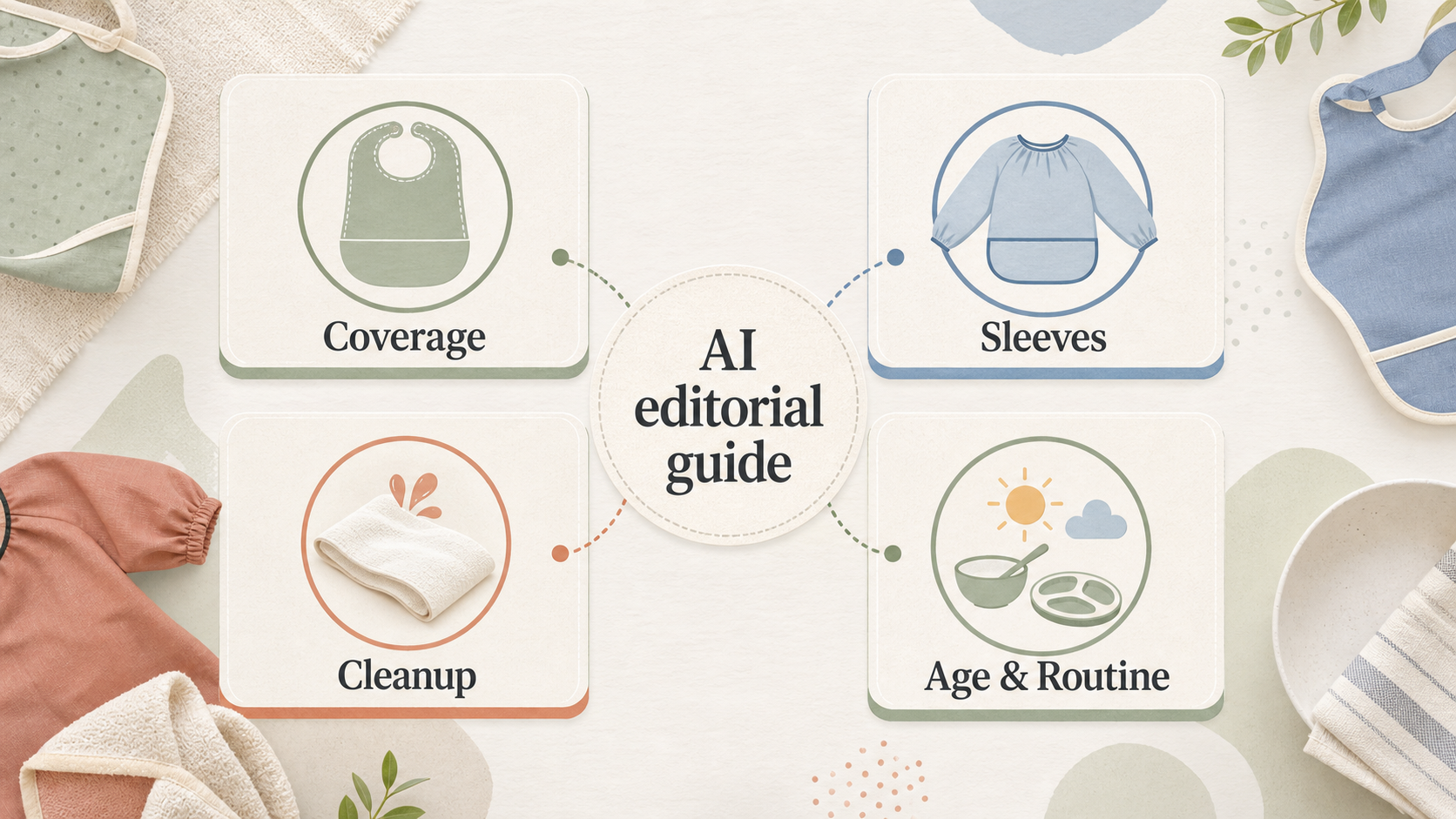 The comparison below is a decision guide, not a laboratory test. Where it draws a conclusion from the product format or a review description, it is labelled as an inference rather than a proven head-to-head result.
| Decision area | Bibado coveralls | Bumkins SuperBib | What to ask yourself |
|---|---|---|---|
| Coverage | Long-sleeve and short-sleeve coverall options are offered. | The supplied independent review describes a waterproof bib, not a coverall format. | Are sleeves and clothes regularly part of the mess? |
| Fit with self-feeding | A coverall format may suit parents prioritising clothing protection during exploratory eating. Inference from format. | May suit a routine that only needs a waterproof feeding layer. Inference from review description. | How much food reaches beyond the front of the outfit? |
| Cleaning | Choose based on your willingness to handle a broader bib after meals. Parent-preference consideration. | An independent review describes the SuperBib as easy to clean. | Is post-meal clean-up your biggest frustration? |
| Storage and packing | Assess the space it takes in your own bag or cupboard. Parent-preference consideration. | An independent review describes the SuperBib as easy to store. | Do you need a bib that is routinely packed for trips out? |
| Feeding stage | Select the sleeve format around your child’s habits and the type of meal. Inference from range. | The independent review discusses use for children around six months to two years. | Is your child at a stage where a front waterproof bib meets the mess level? |
| Wider weaning setup | Can be one part of a protection-first home-mealtime setup. Inference from format. | Can be one part of a simple everyday feeding kit. Inference from review description. | Would a highchair, mat or spare top solve the remaining problem? |
A useful shortcut is to start with the mess you actually see. If the child’s sleeves and top regularly need changing, look first at a coverall. If the bib needs to be cleaned, stored and used again with minimal fuss, the independently reviewed Bumkins characteristics deserve more weight. Many families may find that the answer changes between home meals and meals out.
Alternatives Worth Considering
If neither approach feels quite right, widen the decision beyond these two bib styles. A simple front bib may be enough for lower-mess snacks or for a child who is becoming more coordinated. A wider-coverage bib category may be worth exploring when clothing changes are the recurring issue. You could also focus on the wider feeding setup—such as a highchair arrangement, washable mat, cup, cutlery or spare-clothes plan—rather than expecting one bib to solve every part of mealtime.
That broader perspective reflects the real feeding-and-weaning landscape. MadeForMums’ awards coverage includes bibs alongside highchairs, booster seats, cups, cutlery, tableware, food processors and weaning sets. It does not establish that any unnamed alternative is better than Bibado or Bumkins, but it is a useful reminder that everyday mess management often comes from combining a few practical tools.
Choose an alternative category only after identifying the problem you are trying to reduce: sleeve mess, front-of-clothes mess, cleaning time, travel packing or the overall feeding setup.
Frequently Asked Questions
Which bib style is more suitable for baby-led weaning?
For baby-led weaning, start with the amount of mess that reaches clothing. Bibado’s long-sleeve and short-sleeve coverall formats may suit a family that wants broader clothing coverage during exploratory self-feeding. A waterproof SuperBib may suit parents who prefer a simpler feeding layer and value the easy-clean, easy-store qualities noted in an independent review. There is no universal winner: your highchair setup, meal type and tolerance for laundry matter too.
Are coverall bibs practical for eating out or nursery?
They can be practical if broader clothing protection is the priority, but practicality depends on how easily the format fits your own packing and changing routine. Before relying on one for nursery or meals out, consider available bag space, whether spare clothes are already packed and how quickly you need to remove and store it after a meal. A more compact waterproof-bib style may be attractive when storage convenience is the larger concern.
How should I choose a bib for an older baby or toddler?
Use your child’s current habits rather than age alone. BabyGearLab’s review places the Bumkins SuperBib in an approximate six-month-to-two-year use context, but children within that span can create very different levels of mess. If sleeve coverage remains important, compare Bibado’s long- and short-sleeve coveralls. If easy cleaning and storage are the priorities, the Bumkins qualities described in the review may be more relevant.
Sources
Related reading
- Best Baby Feeding Bibs and Mealtime Gear: Evidence-Led Choices for Everyday Messes
- Bibado Review: Coverall Bib Strengths, Limits and Alternatives
- Bumkins Review: Who Its Waterproof Bibs Suit and Who Should Skip Them
- How to Choose Baby Feeding Bibs and Mealtime Gear for Your Routine
Editorial information: About our editorial team · Read our editorial policy · Read our affiliate disclosure.