Bibado’s long-sleeve and short-sleeve coverall bibs are worth considering for UK families who want more clothing coverage during messy weaning. The main appeal is straightforward: a coverall format is designed to protect clothes and make post-meal clean-up less involved. That said, this is a manufacturer-led evidence base, so it supports understanding the product’s stated design and safety guidance rather than proving that it will save the same amount of time or mess for every household.
Bibado Review Verdict
Bibado coverall bibs look like a sensible option for parents and carers who regularly deal with splashes, dropped food and outfit changes at mealtimes. Bibado sells both long-sleeve and short-sleeve coveralls, so shoppers can choose a format that better matches their child’s clothes, the temperature and their preferred level of coverage. The brand positions the products as coverall weaning bibs intended to help keep clothes clean and dry during messy meals.
The most useful reason to consider one is not a promise of effortless feeding; it is the possibility of reducing how much of your child’s clothing needs attention after a meal. Bibado says its material is easy to wipe clean and that the bib can attach to a highchair or pushchair, but those are manufacturer statements rather than independent comparative test results. The right choice therefore depends on your feeding setup, your child’s stage and whether the added coverage suits your usual routine.
For a broader decision, compare this style with the options in a baby feeding bib buying guide and a weaning essentials guide. A coverall can be a practical candidate when clothing protection is the priority, but it should still be used alongside normal highchair safety practices.
What Bibado Coverall Bibs Are
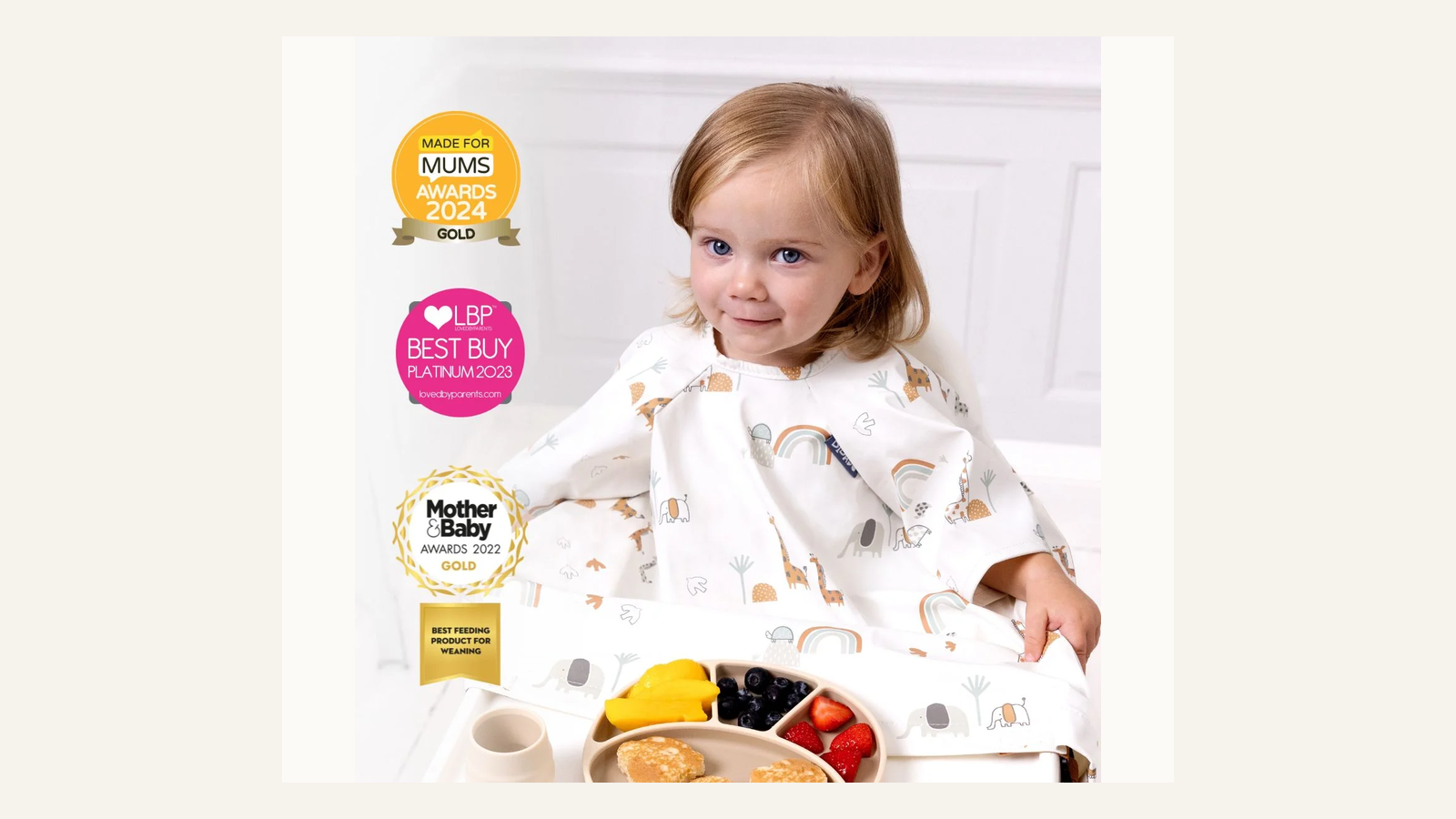 Bibado’s coverall range includes long-sleeve and short-sleeve coveralls. These are feeding bibs with broader coverage than a small neck bib: the stated purpose is to protect clothes during messy weaning and mealtimes. The product range page lists the two coverall formats separately, allowing parents to begin by choosing sleeve length rather than assuming there is only one version.
The long-sleeve option is the more obvious starting point for families seeking coverage across the arms as well as the front of an outfit. A short-sleeve coverall may make more sense for warmer days, short meals or households that want the same general format with less arm coverage. Neither choice is automatically better; the useful comparison is how much coverage your child needs and what feels manageable for everyday use.
It is also important to separate an individual coverall bib from Bibado’s build-your-own bundle. According to the bundle page, that package includes two long- or short-sleeve coverall weaning bibs, three selected weaning accessories and one free First Foods Weaning Chart, subject to the offer described by Bibado. Those accessories are bundle choices, not evidence that every coverall bib purchase includes cutlery, cups or other feeding items.
If you are deciding between bib formats more generally, a guide to starting baby-led weaning and a comparison of baby and toddler bib styles can help put coveralls in context. The key question is whether expanded clothing coverage is useful enough to justify choosing this category.
Bibado Coverall Bib Strengths
The clearest potential strength is clothing coverage. Bibado describes its coveralls as attaching to a highchair or pushchair and helping to keep clothes clean and dry through messy mealtimes. For parents whose main frustration is changing stained tops or trousers after food exploration, that stated design aim is relevant. It is especially worth considering when meals are hands-on and food is likely to travel beyond the tray.
The choice of long-sleeve and short-sleeve versions is another practical advantage. Long sleeves may appeal when protecting arm coverage is part of the goal, while short sleeves give parents a less enclosed format to consider. This is a genuine buying choice rather than a feature that should be treated as universally useful: the better option depends on the child’s clothing, the room temperature and how much coverage the household wants.
Bibado also says the coverall uses an easy wipe-clean material for quicker cleaning. That could suit a routine where a parent wants to deal with the bib soon after a meal rather than add another fabric item to the wash. However, the brand’s statement that users save an average of 30 minutes a day is advertising evidence, not independently verified editorial testing, so it should be read as a claim rather than a likely result for every family.
On safety and materials, Bibado says its coverall bibs have passed international safety testing for specified markets and are free from BPA, phthalates and azo-dyes. That may be reassuring information to check when comparing products, but it remains manufacturer-supplied evidence. The independent MadeForMums awards page confirms that feeding and weaning products can be assessed on factors such as ease of use, quality, design and effectiveness; it does not independently test or validate the Bibado-specific statements supplied here.
For practical context, pair any bib decision with a baby feeding safety guide and simple mealtime clean-up habits. A bib can support the clean-up routine, but it does not replace attentive feeding or safe seating.
Bibado Coverall Bib Limitations
The most important limitation is safety-related: Bibado explicitly says that its coverall bibs catch food, not babies, and are not restraints. A child must be harnessed correctly according to the highchair’s safety instructions and must never be left unattended. This should be treated as a use requirement, not a minor disclaimer or a feature of the bib.
Parents should also check whether their highchair or pushchair setup is compatible with the way they expect to use the coverall. Bibado describes the product as strapping to a highchair or pushchair, but the supplied evidence does not establish compatibility with every model or every family’s setup. Before purchasing, check the product information and your seat’s instructions rather than assuming attachment will work exactly as hoped.
Coverage is not the same as a guarantee of a mess-free meal. Bibado’s claims about keeping clothes clean and dry, wipe-clean convenience and average time saved come from the manufacturer. They are useful signals of the intended product design, but the supplied independent editorial source does not provide a Bibado-specific hands-on comparison or test result. It would be inappropriate to present those claims as independently proven performance.
Finally, bundle expectations need care. Bibado’s build-your-own bundle has a defined configuration: two coverall bibs, three chosen accessories and one free chart as described on its page. An individual coverall should not be assumed to include those extras. A highchair safety checklist and guide to choosing bib size and style can help narrow the decision before ordering.
Bibado Alternatives
A coverall is only one way to approach feeding mess. If your main need is broad clothing coverage, a sleeved or coverall-style bib remains the most directly comparable category. If you need something simpler for quick snacks or less messy meals, a smaller conventional bib may be easier to put on and remove. The best choice is usually driven by the amount of coverage you want, how often you feed away from home and how you prefer to clean up afterwards.
For households that value a different mealtime setup, consider categories designed around other priorities. Pocket bibs can suit parents focused on catching food close to the child, while other feeding accessories may be more relevant if the real issue is cups, cutlery or the highchair environment rather than clothes. These are category-level alternatives, not claims that one named product is better than another.
The independent MadeForMums awards coverage shows that feeding and weaning items are commonly considered through ease of use, quality, design, effectiveness and value. Those are sensible lenses for comparing alternatives too. Ask whether the item fits your normal meals, can be managed within your cleaning routine and works safely with your child’s seating arrangement.
A best baby bibs roundup or a comparison of silicone, sleeved and pocket bibs can provide a wider shortlist. Choose a simpler bib when the extra coverage of a coverall would add more effort than value, and consider a coverall when protecting clothes is the central need.
Who Bibado Coverall Bibs Suit
AI-generated generic editorial illustration — not a retailer product photo and does not depict the reviewed product or service. Help readers assess whether a coverall bib format fits their mealtime setup and priorities.
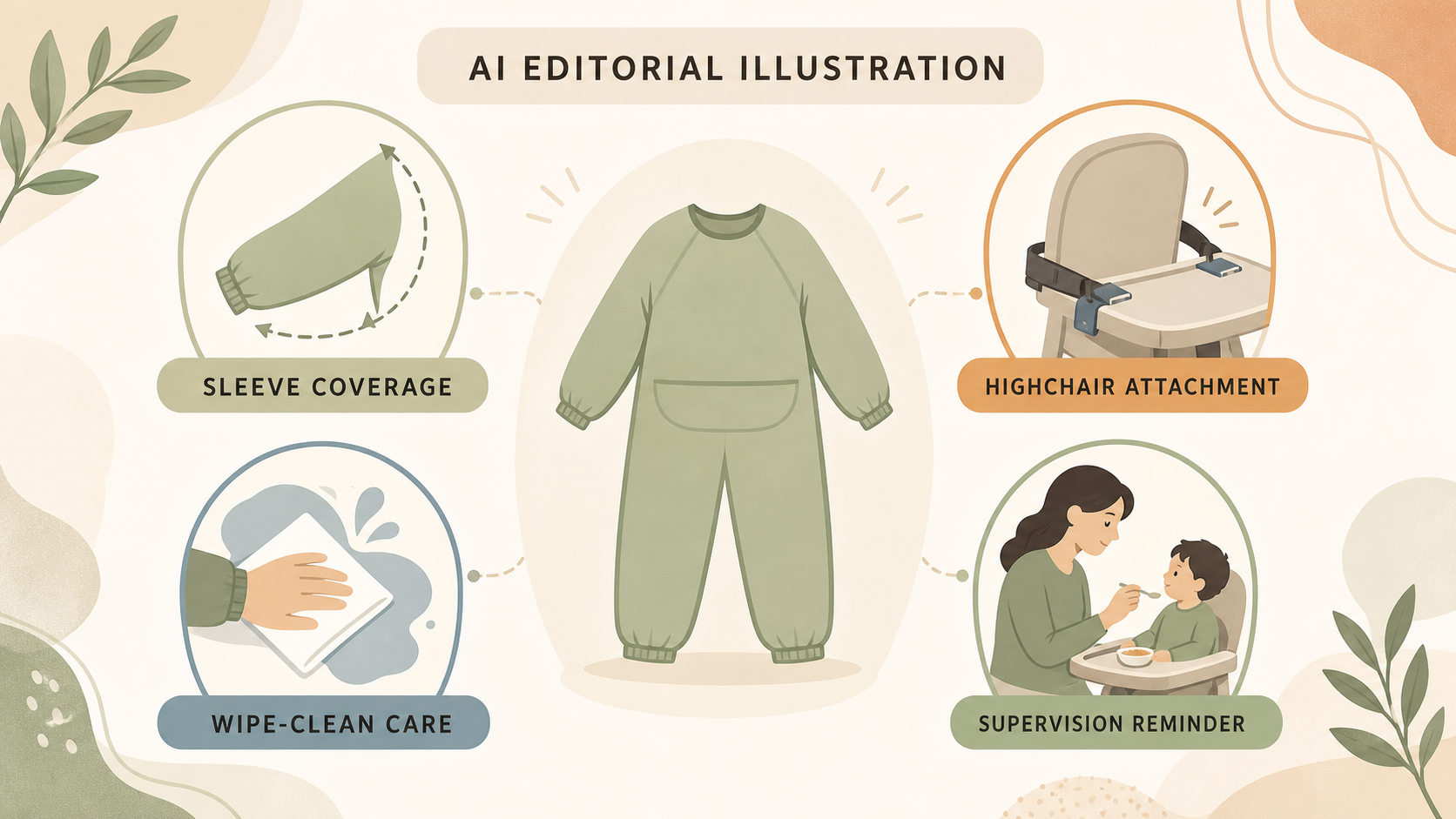 Bibado coverall bibs are most likely to suit families who want more protection for a child’s clothes during regular, messy weaning meals. The availability of long-sleeve and short-sleeve formats gives those households a useful choice: select the sleeve length that best fits the level of coverage you want and the conditions in which your child usually eats.
They may be less compelling for carers who mainly need a minimal bib for quick, low-mess snacks, or for anyone whose highchair setup does not support their intended use. The product should be assessed as a practical clothing-protection tool, not as a restraint or a substitute for correct harnessing and supervision.
A conditional recommendation is appropriate. Consider Bibado if expanded coverage and a wipe-clean routine match your household, and if you are comfortable relying on manufacturer information for the stated material and convenience benefits. Compare alternatives if a smaller bib, a different clean-up routine or another feeding accessory would better address your actual problem. A weaning shopping checklist and advice on managing messy toddler meals can help turn that comparison into a more confident purchase decision.
Frequently Asked Questions
Are Bibado coverall bibs intended to restrain a baby in a highchair?
No. Bibado says its coverall bibs catch food rather than babies and are not restraints. Children should be correctly harnessed according to the safety instructions for their highchair and should never be left unattended.
What is the difference between Bibado long-sleeve and short-sleeve coveralls?
The supplied range information lists both long-sleeve and short-sleeve coveralls. The practical difference is sleeve coverage: parents can choose the format that better fits the level of clothing protection and everyday comfort they want.
What comes in Bibado's build-your-own bundle?
Bibado states that the bundle includes two long- or short-sleeve coverall weaning bibs, three chosen weaning accessories and one free First Foods Weaning Chart, with the accessories selected from the options shown on its bundle page. Check the current product page before ordering, as bundle details and availability may change.
Are Bibado coverall bibs made for baby-led weaning only?
Bibado markets the products as coverall weaning bibs for messy mealtimes. The supplied evidence does not say that they are limited to baby-led weaning, so it is more accurate to view them as a coverage-focused bib option for feeding routines generally, while following normal highchair safety and supervision guidance.
Sources
Related reading
- Best Baby Feeding Bibs and Mealtime Gear: Evidence-Led Choices for Everyday Messes
- Bibado vs Bumkins: Which Bib Is the Better Fit for Your Mealtime Routine?
- Bumkins Review: Who Its Waterproof Bibs Suit and Who Should Skip Them
- How to Choose Baby Feeding Bibs and Mealtime Gear for Your Routine
Editorial information: About our editorial team · Read our editorial policy · Read our affiliate disclosure.