Mess at mealtimes is normal, but the clean-up routine does not have to feel improvised. The right bib is less about finding one universal “best” style and more about matching coverage, material and handling to the way your child currently eats.
Start with Your Everyday Feeding Routine
Begin with the meal that creates the most work, rather than the one that looks easiest in a product photo. Think about where your child eats, whether they are spoon-fed or self-feeding, how often meals happen away from home and how much time you realistically have between a spill and the next task.
A milk feed, a yoghurt snack and a baby-led weaning lunch can create very different mess patterns. Front-only protection may be enough for dribbles and light spoon-feeding, while a child who reaches, smears and drops food may need protection that extends over the shoulders, sleeves or lap. Your own set-up matters too: a high chair with a smooth, wipeable tray creates a different clean-up job from a dining chair beside a carpeted floor.
Use four questions to frame the choice:
- Where does food usually land: chest, lap, sleeves, tray or floor?
- Is the main issue liquid dribble, loose crumbs or wet, sticky food?
- Do you need the bib to travel in a changing bag?
- Who will put it on, take it off and clean it after the meal?
That routine-first view keeps the decision practical. It also helps you buy for the stage you are in now, rather than overbuying for every possible feeding scenario.
Match Bib Coverage to the Mess You Expect
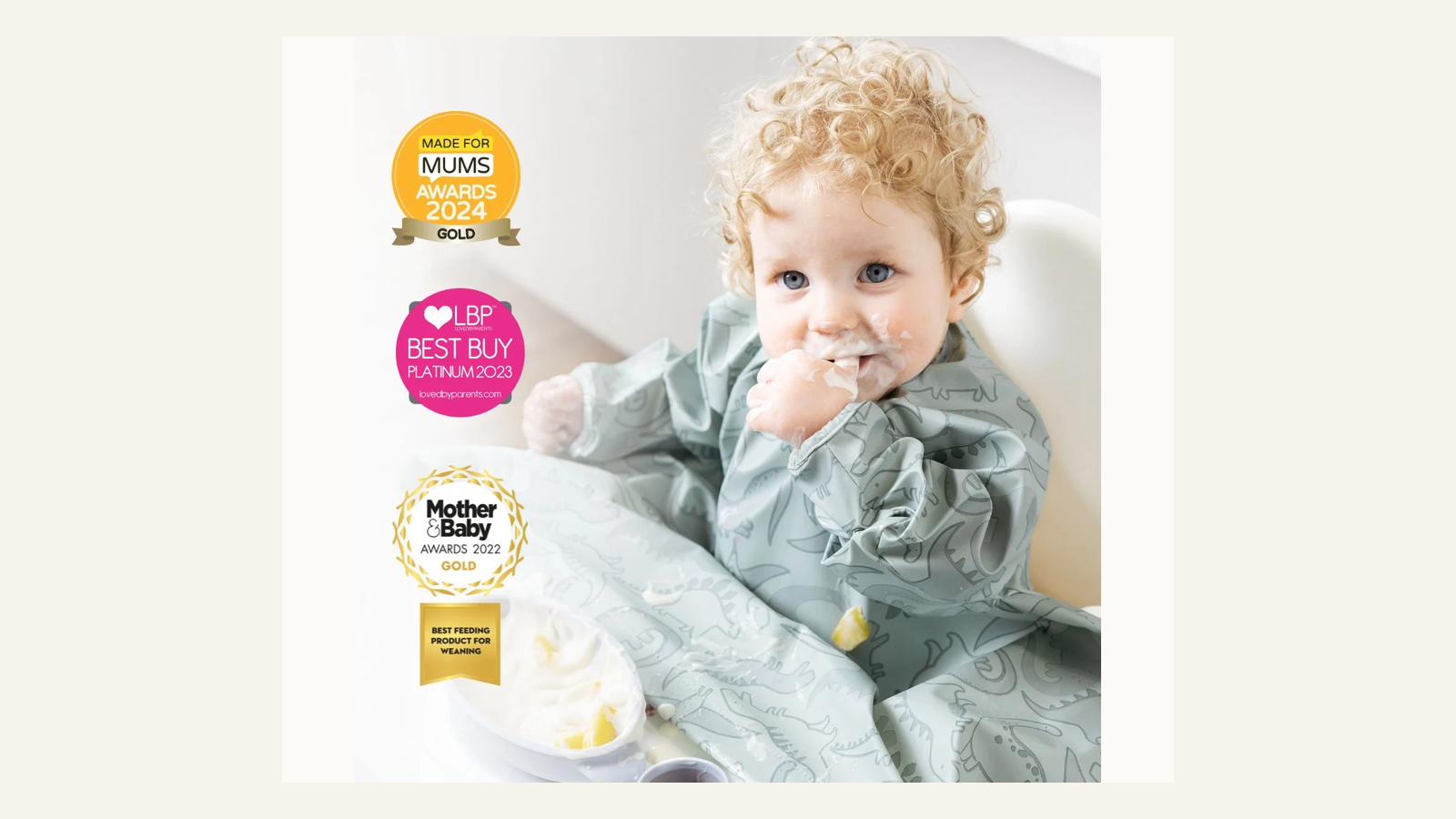 Coverage is the first useful filter. A simple front bib can suit low-mess feeds when you mainly want to protect the neckline and chest. A bib with a spill pocket can add a useful catch zone for crumbs and dropped pieces, but it is still primarily front protection.
For more active self-feeding, look at where the mess spreads. If food often reaches sleeves and shoulders, a sleeved or coverall style can reduce how often an outfit needs changing. If your child is especially enthusiastic with sauces, pasta or finger food, wider coverage can make the after-meal reset simpler—but it may also take longer to put on and remove.
Coveralls are not all the same. Bibado’s official weaning-bib range currently distinguishes between Long-Sleeve Coveralls and Short-Sleeve Coveralls, which makes the sleeve choice a practical comparison point rather than an all-or-nothing decision. Long sleeves may suit particularly splashy meals, painting-style food exploration or days when you want more clothing protection. Short sleeves can be a middle ground when the chest and lap need coverage but full sleeves feel unnecessary.
Independent product testing also illustrates the trade-off. Reviewed found a full-body long-sleeve smock gave strong back protection for very messy activities, while noting that it was time-consuming to use. The same review found that a deep spill pocket could catch spills effectively, while also feeling obstructive in some cases. Treat these as prompts for your own checklist, not as a universal ranking: the best format is the one your child will tolerate and you will use consistently.
A simple rule of thumb is to choose the least coverage that reliably handles your usual mess. Keep a higher-coverage option for meals or activities that genuinely call for it.
Balance Cleaning Convenience, Comfort and Portability
The next decision is what happens after the meal. Wipe-clean structured bibs can be convenient when you need a quick reset at the table. Fabric-based bibs and coveralls may be lighter or more flexible, but they generally need a clear washing and drying routine. Neither approach is automatically better; the useful choice is the one that fits your household’s laundry capacity and storage space.
Pay attention to the interaction between material and shape. A firm, moulded bib may hold its pocket open well and be easy to wipe, yet a rigid shape can sit differently on different children. In Reviewed’s testing, one easy-clean portable bib was described as sturdy and easy to clean, but its stiffness did not conform as closely to the child’s body and some food reached clothing. A deeper spill pocket caught food effectively in the review, but could feel like an encumbrance.
Softer fabric constructions can feel less bulky and pack down more easily. They still deserve a realistic stain check. Reviewed noted that a stain-resistant fabric bib in its test did not fully resist spaghetti staining. That does not make fabric unsuitable; it means your decision should include whether you can rinse promptly, wash enough items in rotation and live with occasional visible marks.
Before buying, check:
- whether the surface can be wiped clean or must be washed after each use;
- whether the bib can dry in time for the next meal;
- whether the pocket stays usable when your child is seated;
- whether it folds or rolls into the space you have; and
- whether the material and seams look manageable for the foods your child eats most often.
Choose convenience for your actual routine, not the ideal routine you hope to maintain on a busy weekday.
Check Fit, Closures and Everyday Handling
A bib only helps if it is straightforward to use repeatedly. Look at the neckline first: it should sit close enough to protect clothing without becoming an uncomfortable distraction. Then consider the closure. The practical question is whether you can fasten and release it quickly with a wriggling child, including when your hands are wet or food-covered.
For sleeved or coverall styles, think through the full sequence. Can the sleeves go over everyday clothing without a struggle? Is there enough room for movement in the high chair? Can you remove the bib without dragging food across the child’s face or outfit? A more protective style can be worth the extra steps for certain meals, but it is sensible to test whether those steps fit your normal pace.
Pocket design also belongs in the handling check. It should be positioned where dropped food can reach it while seated, without pressing awkwardly against the tray. In independent testing, a bib’s latch was reported to loosen easily, a reminder to check closures as well as material and coverage.
If possible, rehearse the routine mentally: put it on, adjust it, seat your child, clear the pocket, remove it and decide where it goes next. If any step feels annoying before the first meal, it is likely to feel more so after several.
Build a Practical Mealtime Gear Set
A bib works best as one part of the clean-up system. Start with the gap that causes the most friction. If clothing changes are the issue, prioritise coverage. If the high-chair tray is the problem, a wipeable tray routine or placemat may matter more. If food repeatedly lands on the floor, a floor mat or a dedicated post-meal sweep-and-wipe routine may do more than another bib style.
Useful supporting items can include a placemat, bowl or plate suited to your table set-up, a cup that fits your child’s current drinking stage, washable cloths and a spare outfit for outings. You do not need every item at once. Avoid duplication by checking what your high chair already provides: some trays are simple to wipe, while others may work better with an added surface that can be lifted and cleaned.
For travel meals, favour a smaller kit: one bib that can be contained after use, wipes or a cloth, and a spare layer of clothing. For home meals, a larger-coverage bib plus a predictable tray-and-floor reset may be more useful. The aim is not a perfectly mess-free meal; it is a routine that makes the mess manageable.
Use a Shortlist Before You Buy
AI-generated generic editorial illustration — not a retailer product photo and does not depict the reviewed product or service. Help readers weigh coverage, cleaning effort, comfort, and packability before making a shortlist.
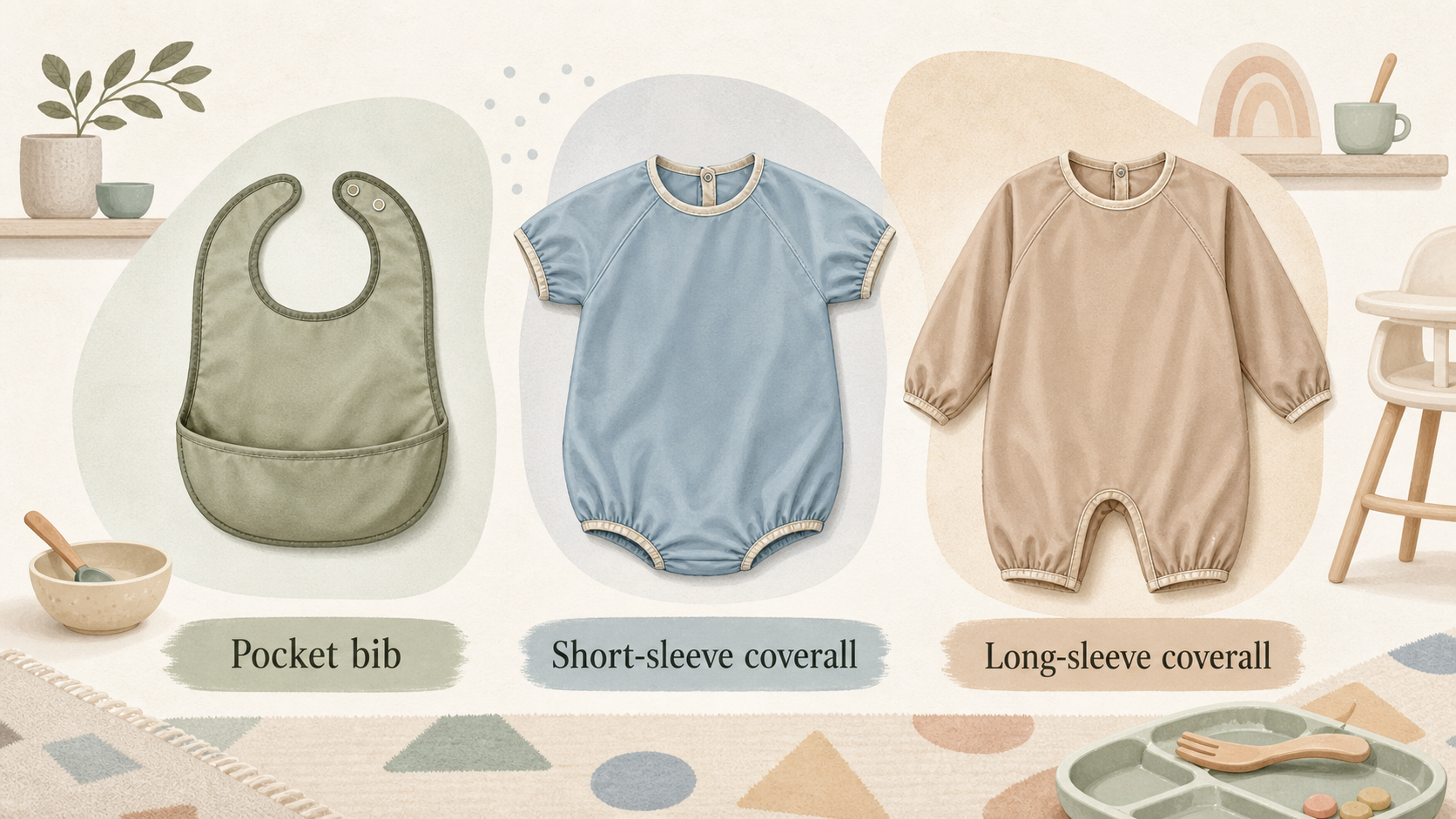 Build a shortlist from your routine rather than from a broad product ranking.
- Name your most common mess: dribble, crumbs, wet food, sleeve mess or full-body exploration.
- Pick the minimum coverage that deals with it: front-only, pocketed, short-sleeve or long-sleeve coverall.
- Decide whether quick wiping, washing flexibility or compact packing matters most.
- Check fit, closure and pocket placement against your child’s seat and clothing.
- Buy enough for your washing rhythm, not simply the largest available pack.
This sequence makes trade-offs visible. A structured pocket bib may be the strongest candidate for quick, contained clean-up; a lightweight fabric bib may be easier to pack; a short- or long-sleeve coverall may suit meals where clothing protection is the priority. Bibado’s current range of both short- and long-sleeve coveralls is one example of why it is useful to compare formats within a range rather than assume that every coverall meets the same need.
Set a budget after narrowing the format. Spending more on a style that fits your daily routine can be more useful than buying several options that remain in a drawer.
Frequently Asked Questions
Should I choose a silicone bib, a fabric bib or a coverall for weaning?
Choose by mess pattern and clean-up routine. A wipe-clean, structured bib may suit quick table-side clean-up and dropped food; a fabric bib may suit a lighter, more flexible option if you are happy to wash it; and a coverall may suit meals where food commonly reaches sleeves or clothing. Start with the minimum coverage that reliably handles your usual meal.
Are long-sleeve bibs worth using for every meal?
Not necessarily. Long-sleeve coveralls can be useful for particularly messy self-feeding or activities where food reaches the arms and clothing. For a lower-mess snack or feed, a simpler bib may be quicker and more comfortable. Keep the long-sleeve option for the situations where its extra protection saves you a meaningful clean-up.
How many feeding bibs do I need for a typical week?
The useful number depends on meal frequency, whether each bib is wiped or washed, drying time and how often laundry runs. Count the meals you expect to cover between washes, then add a small buffer for a delayed wash or an especially messy day. A mix of lighter everyday bibs and one higher-coverage option can work well when the mess level varies.
What should I clean after a messy baby-led weaning meal?
Work from your actual mess map: clear food from the child and bib, empty or wipe the bib pocket if it has one, clean the tray or table surface, check the seat and straps, and deal with the floor where food has landed. A placemat, cloths and a spare outfit can reduce the number of separate trips needed after the meal.
When you are ready to compare specific formats, use a routine-led shortlist and revisit the decision as your child’s feeding style changes.
Sources
Related reading
- Best Baby Feeding Bibs and Mealtime Gear: Evidence-Led Choices for Everyday Messes
- Bibado vs Bumkins: Which Bib Is the Better Fit for Your Mealtime Routine?
- How Baby Feeding Bibs Should Fit, Feel and Perform
- When to Buy Baby Feeding Bibs and Mealtime Gear for Better Value
Editorial information: About our editorial team · Read our editorial policy · Read our affiliate disclosure.