Verdict: Match the Bib Format to the Mess
There is no single best bib for every weaning routine. A practical starting point is to match the format to the mess you expect, the amount of clothing protection you need and the clean-up you can realistically manage each day.
For ordinary feeds, a compact wipe-clean bib or a structured catch-pocket bib may be enough. For energetic self-feeding, a suction bowl or plate can address food moving around the table, while a bib deals with what reaches clothing. When meals regularly involve sauces, pasta or enthusiastic arm movements, a coverall can make more sense because it protects more of the outfit.
The shortlist below is a comparison of documented product formats and features, not a record of hands-on testing. Treat manufacturer descriptions as product information, and use independent review observations as useful context rather than a promise that every child will have the same result.
Check current UK availability before buying Browse current deals →
What Counts as Practical Mealtime Gear
A useful everyday set-up can include more than one item: a feeding bib for clothing protection, a coverall for broader coverage, and self-feeding tableware that helps keep food within reach. These solve related but different parts of the same clean-up problem.
Structured silicone bibs are designed to catch dropped food, while fabric or wipe-clean coveralls extend protection across sleeves and clothing. For a child learning to self-feed, a plate or bowl with easy-scoop walls and a suction base may help make food easier to access and keep the dish in place. Munchkin describes its C’est Silicone self-feeding set as including a suction plate, suction bowl and easy-grip spoon, with easy-scoop walls on the bowl and plate.
The practical choice is therefore not simply “bib versus no bib”. Consider coverage, containment, material, fastening and cleaning together. A small bib may be quicker to pack for a café; a coverall may reduce outfit changes at home; and tableware can be a complementary purchase when the table is part of the mess.
How to Choose for Your Routine
AI-generated generic editorial illustration — not a retailer product photo and does not depict the reviewed product or service. Make the format trade-offs easy to scan before readers use the shortlist.
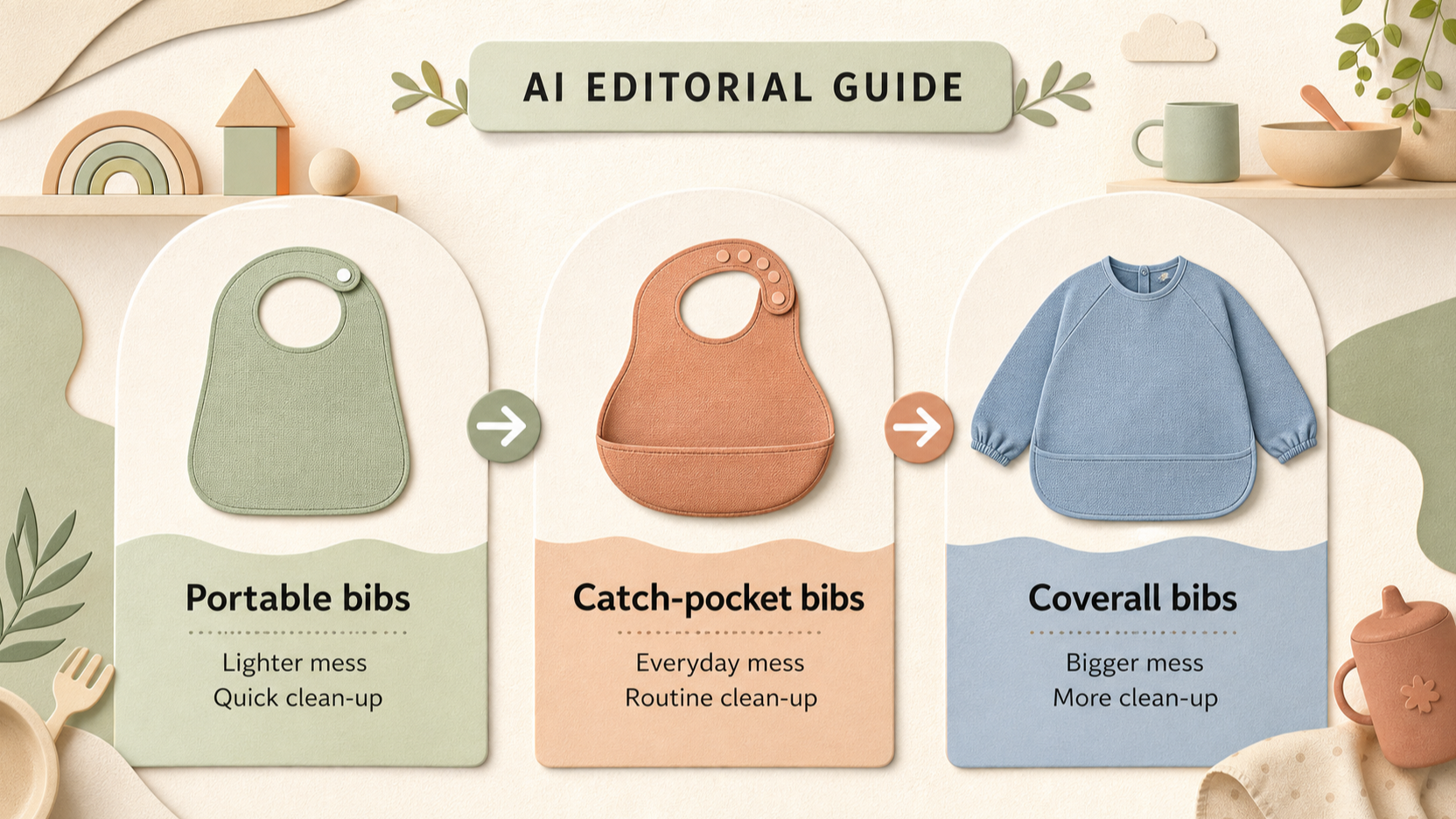 Start with the meal, not the product name. The following questions make the trade-offs easier to compare.
- How much coverage is needed? A neck-to-torso bib can suit lower-mess feeds. A long- or short-sleeve coverall may be more suitable when protecting sleeves and clothing is the priority. Bibado’s collection lists both long-sleeve and short-sleeve coverall formats.
- Where does the food usually go? If much of it falls from the mouth or hands, a catch pocket may be useful. If the plate is being pushed or lifted, a suction base and scoop-friendly dish shape can be more relevant.
- How quickly must it clean up? Wipe-clean formats can be convenient between meals, but follow the maker’s care instructions. Munchkin advises washing its silicone set after use and avoiding abrasive cleaners.
- Will the child tolerate the fit? Structured pockets and higher-coverage garments can involve more fastening, adjustment or fabric around the body. The best choice is the one your child will actually wear through a meal.
- What does your routine value most? Portability, clothing protection and self-feeding support are separate benefits. Decide which one removes the most friction from your day.
An independent review can help identify possible real-world compromises. Reviewed found that a deep spill pocket caught spills well on one BabyBjörn bib, while also describing the pocket as somewhat obstructive. That is a useful prompt to assess fit, rather than a universal verdict on every catch-pocket bib.
Strengths of the Main Formats
Silicone self-feeding gear can be useful when the table is the main source of the mess. Munchkin states that its set uses food-grade silicone, has easy-scoop walls and a suction base; these features are intended to support a child learning to self-feed. The same page gives detailed cleaning and inspection instructions, which is valuable when a product will be used repeatedly with food.
Catch-pocket bibs focus on interception. In Reviewed’s comparison, the BabyBjörn Baby Bib’s deep spill pocket was reported to catch spills effectively. A pocket can be particularly helpful where food is frequently dropped before it reaches the table or floor, although the fit and shape still matter.
Coveralls focus on clothing coverage. Bibado lists short-sleeve and long-sleeve weaning coveralls, making the format a relevant alternative when a conventional bib leaves sleeves or sides exposed. Higher coverage can be especially useful for exploratory meals, painting-like food play or dishes likely to splatter.
Milk-feeding bibs serve a narrower routine. Tommee Tippee has a UK product category for baby milk-feeding bibs, so they may be worth considering separately from a full weaning set-up. The supplied page evidence confirms the category, but does not establish comparative absorbency, fit or clean-up performance.
Limitations and Trade-Offs
More coverage can require more time. Reviewed described a full-body long-sleeve waterproof smock as providing full coverage but as time-consuming to use. For a family handling several short feeds or leaving the house often, that extra step may outweigh the benefit on lower-mess occasions.
Structured bibs can also have fit compromises. Reviewed reported that the shape of the Tommee Tippee Easi-Roll Bib did not conform as well as some alternatives in its assessment, and that this could allow staining on clothing. This is one review observation, not proof that every child will experience the same fit.
Fabric options may need more stain management. In the same comparison, Reviewed said the Bumkins SuperBib struggled with spaghetti despite being described as stain-resistant. Consider keeping a spare ready if colourful sauces are common.
Finally, do not assume that a material claim answers every safety or care question. Check the specific product page before use. Munchkin, for example, instructs parents to wash and inspect its set before use, replace it at the first sign of weakness or damage, and avoid leaving a child unattended during use.
Alternatives for Different Mess Levels
Choose an alternative format when your current set-up fails in a predictable way.
For relatively simple feeds or travel, a compact wipe-clean bib may be the least cumbersome option. If dropped food is the recurring issue, look for a catch-pocket bib; Reviewed’s assessment of the BabyBjörn bib suggests that a deep pocket can catch spills, though a structured pocket may not suit every child.
For very messy meals, a coverall moves the priority from portability to clothing protection. Bibado offers both short-sleeve and long-sleeve coveralls, so parents can choose the amount of arm coverage that matches the season and the meal. Independent editorial testing of a comparable full-body waterproof smock found strong coverage but a slower put-on process.
For children who are actively learning to feed themselves, add tableware rather than expecting a bib to solve everything. Munchkin documents suction bases and easy-scoop walls on its self-feeding set. A bib protects the child; a stable dish can help with the food at the table. Using both can be more practical than buying a higher-coverage bib alone.
Shortlist: Choose by Use Case
For a self-feeding starter set: Munchkin C’est Silicone!™ Infant Self Feeding Set
This is a documented three-piece set containing a suction plate, suction bowl and easy-grip spoon. Munchkin says the bowl and plate have easy-scoop walls, and that the base is designed to provide strong suction. Its stated material is 100% FDA food-grade and LFGB European food-grade silicone, free of BPA, BPS and PVC. The page positions it for babies aged 4 months and over.
Best fit: a routine where the child is learning to self-feed and the dish moving around the table is as frustrating as food on clothing. It is not a clothing-protection product, so pair it with a bib or coverall if outfit changes are the main problem. Confirm current UK availability, suitability and care instructions before purchase.
For broad clothing protection: Bibado Long-Sleeve or Short-Sleeve Coveralls
Bibado’s weaning-coverall collection lists long-sleeve and short-sleeve coveralls. That makes the range a straightforward format option for parents who need more than chest coverage, especially during meals that spread onto arms and sleeves.
Best fit: families prioritising clothing protection during high-mess meals. Choose sleeve length according to the coverage you need and how willing your child is to wear a more substantial garment. The supplied collection evidence confirms the available coverall categories, but does not independently compare their clean-up time, fit or performance against other coveralls.
For milk-feeding routines: Tommee Tippee Baby Milk Feeding Bibs
Tommee Tippee has a UK category page for baby milk-feeding bibs. This makes the category relevant where feeds are mainly milk-based and a full coverall would be unnecessary.
Best fit: a separate milk-feeding routine rather than a claim that these bibs are the strongest option for messy self-feeding. The available evidence confirms the category page only; check the individual product listing for materials, fastening, washing guidance and UK stock.
For dropped-food containment: a structured silicone catch-pocket bib
A structured pocket can be worth considering when food regularly lands in a child’s lap. In Reviewed’s testing, the BabyBjörn Baby Bib’s deep spill pocket did a good job catching spills, although the reviewer found the pocket somewhat encumbering.
Best fit: children who will tolerate the shape and benefit from a pocket that intercepts dropped food. Try to judge pocket depth and body fit before committing: a feature that contains food well can still be less comfortable for a particular child.
For low-fuss portable meals: a wipe-clean bib format
Reviewed described the Tommee Tippee Easi-Roll Bib as easy to clean and very portable, while also reporting that its stiffer shape did not conform especially well in that review. This is a useful reminder that portability and fit should be assessed together.
Best fit: outings and lower-mess meals where fast packing and cleaning matter most. Treat the review’s fit observation as a reason to inspect shape and fastening, not as a blanket judgement on all portable bibs.
Frequently Asked Questions
Which type of bib is most practical for baby-led weaning?
Choose according to the mess and the part of the routine that needs help. A catch-pocket bib can suit dropped food, a coverall can suit meals that reach sleeves and clothing, and suction tableware can support a child who is pushing or lifting dishes. Munchkin documents scoop walls and suction bases for its self-feeding set; Bibado offers coveralls in two sleeve lengths. Many families may find that a bib plus stable tableware is more useful than one product trying to do both jobs.
Are silicone catch-pocket bibs enough for very messy meals?
They can catch food falling toward the lap, but they do not necessarily protect sleeves, sides or the rest of the outfit. Reviewed found a deep spill pocket effective at catching spills in its BabyBjörn assessment, but also noted that the pocket could feel obstructive. For very messy meals, consider whether broader coverall coverage is the missing feature.
When is a full-coverage coverall bib worth the extra effort?
A coverall is most compelling when clothing protection is more valuable than speedy dressing: for example, frequent sauce-heavy meals or exploratory self-feeding at home. Reviewed reported strong full coverage from a comparable waterproof smock but also found it time-consuming to use. If meals are brief or you are out and about, a simpler bib may be the more practical compromise.
How should parents clean and inspect silicone feeding gear?
Use the product’s instructions. Munchkin advises washing its silicone set with unscented dish soap or detergent, avoiding abrasive cleaners, washing immediately after use to reduce stains and odours, and inspecting before use. Its guidance also says to replace the product at the first sign of weakness or damage. Do not substitute generic cleaning advice for the instructions supplied with the exact item you buy.
Sources
Related reading
- Bibado vs Bumkins: Which Bib Is the Better Fit for Your Mealtime Routine?
- Bibado Review: Coverall Bib Strengths, Limits and Alternatives
- How to Choose Baby Feeding Bibs and Mealtime Gear for Your Routine
- How Baby Feeding Bibs Should Fit, Feel and Perform
Editorial information: About our editorial team · Read our editorial policy · Read our affiliate disclosure.