Tommee Tippee is a familiar name in baby feeding, but a useful bib recommendation needs to be narrower than brand recognition. The supplied official catalogue evidence shows a broad feeding offer, while the exact UK bib, its availability and its specifications should be checked on the relevant official product page before purchase. This guide therefore focuses on the practical questions that matter in everyday weaning and clean-up.
Tommee Tippee Feeding Bibs at a Glance
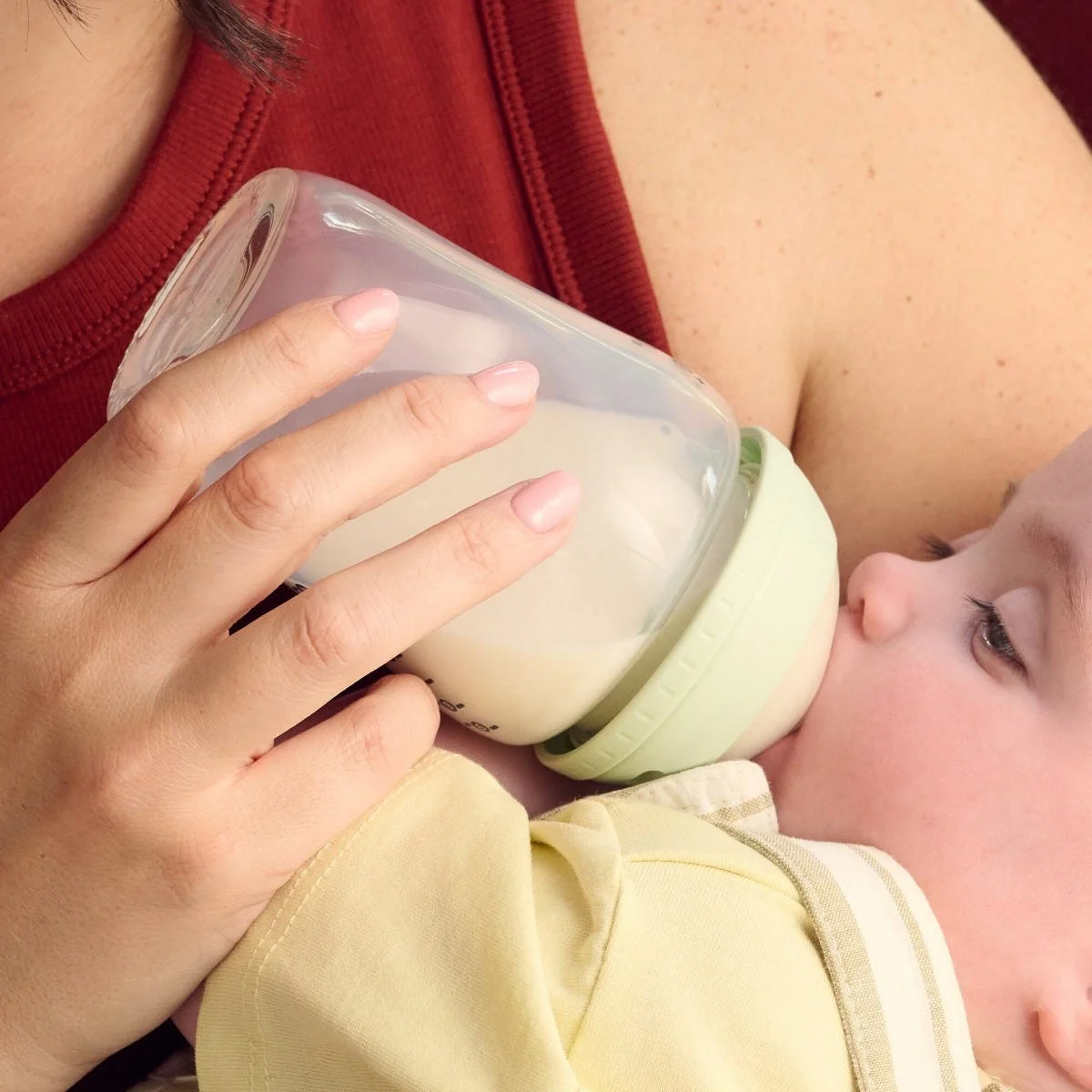 Tommee Tippee is relevant for parents and carers who are already looking at a wider feeding set-up rather than treating a bib as a completely separate purchase. Its official catalogue presents bottle feeding as a substantial category, alongside baby bottles, starter sets, nipples and bottle-feeding accessories. That makes the brand a reasonable one to investigate when you are building out practical mealtime gear. Tommee Tippee official bottle-feeding catalogue
There is an important limit to that starting point. The supplied evidence is from Tommee Tippee’s US-facing official catalogue and establishes the broader feeding range; it does not confirm an individual bib’s material, fastening, coverage, cleaning instructions, price or UK availability. A UK shopper should therefore use the exact UK listing as the decision point, rather than assuming that a product shown in another regional catalogue is identical or currently sold locally.
The useful question is not simply “Is this a feeding brand?” It is “Does the particular bib available to me match the way my child eats?” For early spoon-feeding, frequent snacks, highly messy self-feeding or meals away from home, the answer can depend on coverage, how quickly the bib can be cleaned, whether it stays comfortable through a meal and how many you need in rotation. See our baby feeding essentials guide and weaning checklist for the wider routine around that choice.
Potential Strengths for Everyday Feeding
A bib can earn its place in a daily routine when it removes friction rather than adding another fiddly item to wash, pack and replace. When assessing a specific Tommee Tippee option, start with the practical job you need it to do. A small bib may be enough for milk dribbles or relatively tidy spoon-feeding. A child exploring finger food, sauces or purées may need more coverage around the chest, lap or sleeves. The right level is the one that reduces unnecessary clothing changes without making your child uncomfortable or restricted.
Cleaning is usually the next deciding factor. Think about what happens immediately after a meal: can you wipe it down and use it again, does it need a full wash, and where will it dry? Neither option is automatically better. A wipe-clean style can be convenient during a busy day, while a washable fabric style may suit households that already run frequent laundry cycles. Check the individual product page and care label for the actual cleaning method; do not rely on a general assumption about the brand or a photograph.
Fit is equally practical. Look for a closure that an adult can manage easily and that suits your child’s current size and tolerance. Check the stated age or size guidance, neck adjustment where provided, and whether the listed design is intended for ordinary feeding or a fuller-coverage activity. If your child dislikes anything around the neck or pulls at loose fabric, those details can matter more than a style preference.
It can also help to consider whether a bib fits your existing feeding kit. The official Tommee Tippee catalogue groups bottle feeding with baby bottles, starter sets, nipples and related accessories, so the brand may be convenient to research for families already comparing those areas. That catalogue breadth does not prove that every item works together or that a particular bib is the best choice; it simply gives shoppers a relevant official starting point. Explore Tommee Tippee bottle feeding
Finally, plan for real life rather than a perfect single-meal scenario. A bib that suits breakfast at home may not be the one you want to pack for nursery, grandparents’ houses or a restaurant. Compare the exact listing against your typical mess level, storage space and laundry rhythm. Our guide to choosing a weaning bib and baby feeding clean-up guide can help you turn those habits into a shortlist.
Limitations and Checks Before You Buy
The main limitation of a brand-level assessment is that a name cannot substitute for a product listing. The supplied official evidence does not substantiate individual Tommee Tippee bib specifications for the UK. Before buying, confirm that the exact bib is listed on the official UK site or through a retailer you trust, and read the product details that apply to that particular version. Regional ranges, colours, bundles and stock can change, so avoid treating a broad feeding catalogue as proof of local bib availability.
Check the stated material and care instructions rather than inferring them from appearance. These details affect how the item feels, how it handles repeated meals and what your cleaning routine will involve. If the listing gives a recommended age range, dimensions, fastening type or warnings, compare those details with your child’s current stage. Where a listing is unclear, it is better to pause and ask the seller or choose an option with clearer information than to make an assumption.
Coverage also needs a realistic comparison. A standard bib, a pocket-style design and a sleeved feeding smock solve different problems. More coverage can be helpful for enthusiastic self-feeding, but may feel excessive for a quick snack; less coverage can be simpler, but may lead to more laundry. Think about the clothes your child normally wears at meals, whether they sit in a highchair, and how much protection you actually need around sleeves and lap.
Quantity is another easy point to overlook. One bib may be sufficient if you can clean and dry it promptly, but a family with multiple meals, nursery days or limited washing time may prefer a small rotation. Calculate this from your routine rather than from a generic recommendation: number of messy meals, time to clean, drying time and whether you want a spare in the changing bag all affect the answer.
Price should be evaluated as part of that routine, too. A lower-cost option may be sensible for occasional use; a more durable or easier-to-clean option may be worth considering if it will be used repeatedly. The listing should make the basis of comparison clear. Do not assume durability, stain resistance, safety performance or comfort from the Tommee Tippee name alone unless the exact official product information supports it.
For additional context, read our bib materials explained and baby product safety buying guide. They can help you identify the questions to ask, but the specific product page remains the source for a specific bib.
Who Tommee Tippee Feeding Bibs May Suit
AI-generated generic editorial illustration — not a retailer product photo and does not depict the reviewed product or service. Help readers assess fit and verification needs before buying, rather than portraying unsupported product-specific features.
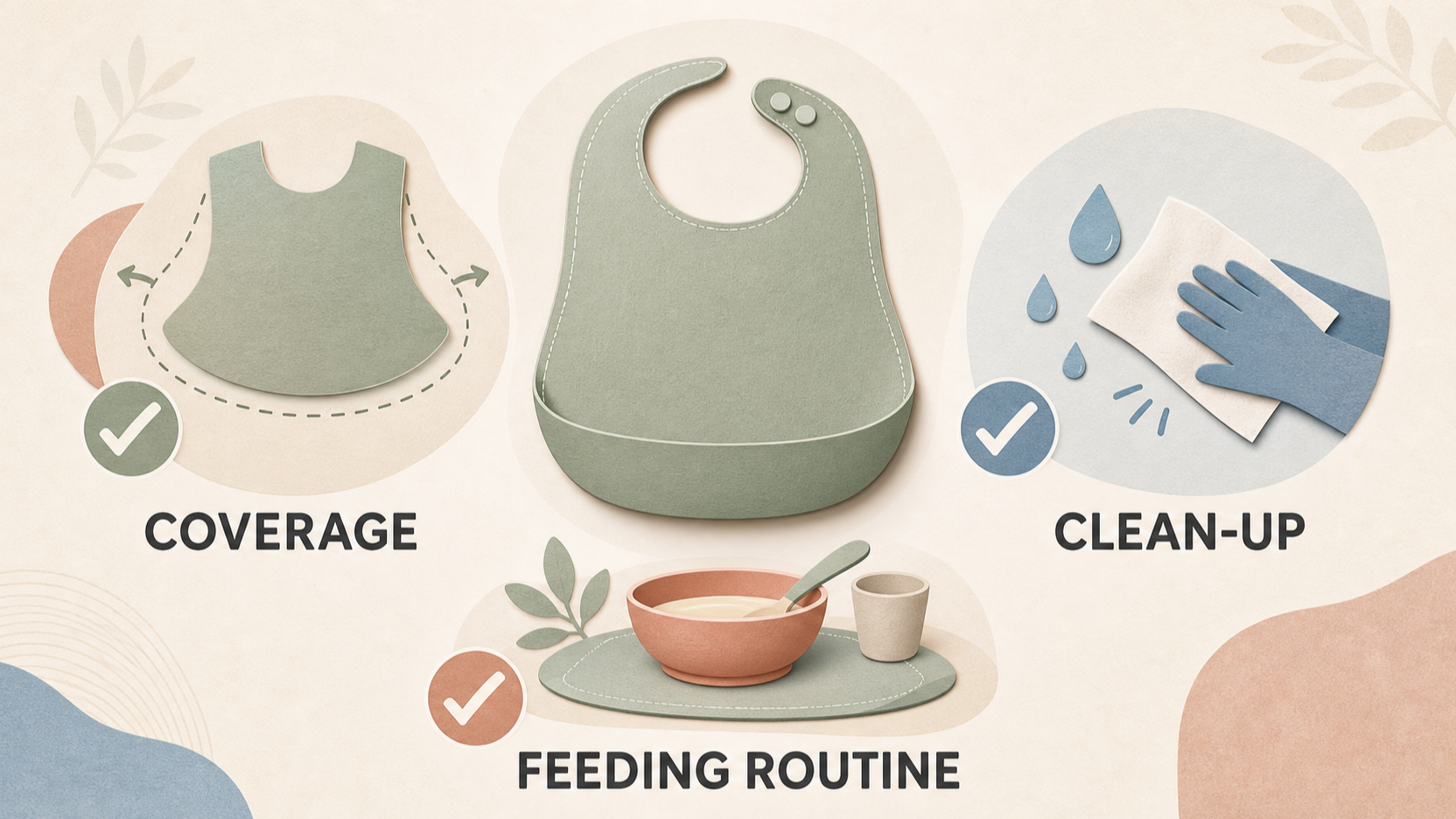 A specific Tommee Tippee feeding bib may suit a household when its listed design lines up with the child’s feeding stage and the family’s clean-up routine. Start by defining the mess you are trying to manage. For milk dribbles or early assisted spoon-feeding, a simpler option may be all you need. For independent weaning and exploratory eating, compare whether the exact product provides the clothing coverage and clean-up approach you expect. The aim is not to find a universal “best” bib, but to choose one that makes your own routine easier.
Use five checks before adding a product to your basket:
- Feeding stage. Is your child being fed by an adult, beginning to self-feed, or regularly handling wetter and messier foods? Check the product’s stated suitability rather than estimating from photos.
- Expected mess. Decide whether you mainly need to catch occasional spills or protect everyday meal clothes. A more protective format may be useful for messy sessions, while a lighter one may be easier for short meals.
- Clean-up routine. Consider whether you need wipe-down convenience, machine-wash compatibility, quick drying or a spare that can stay in the bag. Confirm the care instructions on the exact listing.
- Coverage and fit. Review the listed size, age guidance, closure and coverage. A bib needs to be manageable for the adult and tolerable for the child, not simply attractive on a product page.
- Quantity and budget. Work out how many meals occur between washes and whether nursery, travel or shared care creates a need for extras. Compare packs and individual items only after confirming exactly what each includes.
Tommee Tippee’s official catalogue gives the brand a credible place in a feeding-related comparison because it includes bottle feeding, baby bottles and bottle-feeding accessories. It does not establish that one bib format will suit every baby or that a particular UK product is currently available. Tommee Tippee official site
This approach is especially helpful if you are trying to avoid buying too much too soon. You can begin with the least complicated option that meets your current routine, then reassess if meals become messier or cleaning becomes burdensome. For broader planning, see our weaning by age guide, baby feeding budget guide and bibs versus smocks comparison.
Ready to compare? Use the official UK product page to check the exact bib’s availability, care guidance, size information and price before you buy.
Frequently Asked Questions
Are Tommee Tippee feeding bibs suitable for weaning meals?
They may be, but suitability depends on the exact bib and your child’s feeding stage. Tommee Tippee’s supplied official catalogue supports the brand’s broader connection to feeding, including bottle feeding and accessories, but it does not provide individual UK bib specifications. Check the precise UK product page for stated age guidance, coverage, material and care instructions, then compare those details with the type of meals your child is having. Tommee Tippee bottle-feeding catalogue
What should I check on a Tommee Tippee bib product page before buying?
Check that the listing is for the exact item and region you intend to buy from. Then look for material, care instructions, size or age guidance, closure, coverage description, pack quantity, price, availability and any warnings. If any of these details are missing or unclear, do not fill the gap with assumptions based on brand familiarity or images.
How many feeding bibs does a baby usually need?
There is no single right number. Count your child’s messy meals, how soon each bib can be cleaned and dried, whether one needs to stay in a changing bag, and whether nursery or another carer needs a separate spare. A household with quick washing and tidy meals may need fewer than one managing several daily weaning sessions with limited laundry time.
Should I choose a bib or a full-coverage feeding smock?
Choose according to the mess and coverage you need. A standard bib can be enough for lighter meals or dribbles, while a fuller-coverage format may be worth comparing for regular self-feeding or foods that reach sleeves and lap. Review the exact product’s stated coverage and fit, then weigh it against ease of cleaning, your child’s comfort and the amount of clothing laundry you are trying to avoid.
For more general help, visit our weaning FAQ and baby feeding essentials guide.
Related reading
- Best Baby Feeding Bibs and Mealtime Gear: Evidence-Led Choices for Everyday Messes
- Munchkin Mealtime Gear Review: A Practical Buying Assessment
- How to Choose Baby Feeding Bibs and Mealtime Gear for Your Routine
- How Baby Feeding Bibs Should Fit, Feel and Perform
Editorial information: About our editorial team · Read our editorial policy · Read our affiliate disclosure.